
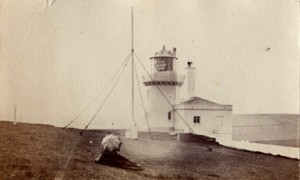
Belle Tout Lighthouse: The Early Years, Trinity House and the Story of a Maritime Landmark
Discover the fascinating history of Belle Tout Lighthouse at Beachy Head, from its construction by Trinity House in the nineteenth century to the arrival of Beachy Head Lighthouse in 1902.
Perched dramatically on the clifftops of Beachy Head in East Sussex, Belle Tout Lighthouse has watched over the English Channel for almost two centuries. Today, it is celebrated as one of Britain’s most distinctive historic buildings and a unique place to stay on the Sussex coast. But its story began with a far more urgent purpose: protecting sailors from one of the most treacherous stretches of coastline in southern England.
Built to guide ships safely past the imposing white cliffs, Belle Tout played an important role in maritime safety before a new lighthouse at the foot of the cliffs took over its navigational duties in 1902. Its early history is closely connected with Trinity House, the historic organisation responsible for maintaining aids to navigation around England, Wales and the Channel Islands.
Why was Belle Tout Lighthouse built?
During the seventeenth and eighteenth centuries, the waters around Beachy Head were notorious for dangerous currents, hidden rocks and shipwrecks. Vessels travelling along the English Channel faced considerable risks as they passed the chalk headland, particularly in poor visibility and challenging weather.
Calls for a lighthouse at Beachy Head date back to 1691, when petitions highlighted the dangers faced by passing ships. However, it would take more than a century for a permanent solution to emerge.
Trinity House, the historic maritime authority responsible for lighthouses and other navigational aids, eventually took steps to establish a light on the headland. The aim was simple but vital: to give sailors a recognisable landmark and help them navigate safely around the dangerous coastline.
The chosen location was Belle Tout, a prominent point high above the sea, offering an elevated position from which a light could be seen by passing vessels.
Trinity House and the first Belle Tout Lighthouse
In 1828, a temporary wooden lighthouse was established at Belle Tout. Its success helped demonstrate the value of a permanent light at this exposed stretch of the Sussex coast.
Plans subsequently progressed for a more substantial structure. The permanent Belle Tout Lighthouse was completed in 1832 and officially began operating on 11 October 1834.
Constructed using granite, the lighthouse was designed to withstand the exposed conditions of the clifftop. Building materials had to be transported across the countryside to reach this remote location, making construction a considerable undertaking for the period.
The light was produced by a system of oil lamps and reflectors, providing an important navigational reference for ships travelling through the English Channel.
Trinity House‘s involvement was central to the lighthouse’s purpose. Its work was not simply about constructing a tower and installing a light; it was about improving maritime safety through careful engineering, dependable operation and the development of navigational aids in locations where they were most needed.
For the lighthouse keepers who maintained the light, the work demanded dedication and vigilance. The exposed clifftop setting brought strong winds, changeable weather and the constant presence of the sea. Keeping the light operating through the night was an essential responsibility.
A lighthouse above the white cliffs of Beachy Head
The position of Belle Tout Lighthouse was carefully chosen to help ships identify the headland and recognise the dangers of the nearby shoreline.
From its elevated position, the lighthouse commanded extensive views across the English Channel. The surrounding landscape, with its rolling South Downs countryside and towering chalk cliffs, was as impressive then as it is today.
However, the very geography that made Belle Tout such a striking landmark also created difficulties.
The chalk cliffs of Beachy Head are continually shaped by weather, wave action and erosion. Over time, the land around the lighthouse became increasingly vulnerable to cliff falls, while the elevated light could also be obscured by sea mist.
These problems presented a serious challenge. A lighthouse could only serve its purpose effectively if mariners could see its light when they needed it most.
By the late nineteenth century, it had become clear that a different approach was required to provide a more dependable navigational warning around Beachy Head.
Why was Belle Tout Lighthouse replaced?
Belle Tout’s position high above the sea was both its defining feature and, ultimately, one of its limitations.
Although its elevation gave the light a substantial range, coastal mist could obscure it. The instability of the surrounding chalk cliffs also raised concerns about the long-term safety of the site.
Trinity House therefore developed plans for a new lighthouse much closer to sea level, below the cliffs at Beachy Head.
The new location offered a different navigational perspective, with the light positioned against the backdrop of the cliffs to help guide vessels past the headland. It also removed the principal navigational light from the increasingly vulnerable clifftop site.
The transition marked an important development in lighthouse engineering. It demonstrated how maritime authorities had to adapt their infrastructure to the realities of coastal geography, changing conditions and the needs of shipping.
Belle Tout’s role as a working lighthouse was drawing to a close, but its story was far from over.
Beachy Head Lighthouse takes over in 1902
The new Beachy Head Lighthouse was constructed between 1900 and 1902 under the direction of Sir Thomas Matthews, Trinity House’s Engineer-in-Chief.
Unlike Belle Tout, which stood high on the cliffs, the new lighthouse was built on the foreshore, approximately 165 metres out from the base of the cliffs.
Construction was a remarkable engineering achievement. Workers had to contend with tides, exposed rock and the difficulty of transporting materials down the steep cliff face. A coffer dam was constructed to help protect the foundations during building work, while a cableway carried workers and materials between the clifftop and the construction site.
The tower was built using thousands of tons of Cornish granite, creating the distinctive red-and-white striped lighthouse that has become one of East Sussex’s best-known coastal landmarks.
Beachy Head Lighthouse entered service in 1902, taking over the principal navigational role previously associated with Belle Tout.
The old lighthouse was decommissioned and subsequently sold by Trinity House in 1903. Its original working purpose had ended, but the building itself would continue to play a part in the history of the area.
Today, Beachy Head Lighthouse remains an important navigational landmark. It was automated in 1983, ending the era of resident lighthouse keepers, and continues to be monitored remotely.
From working lighthouse to historic landmark
Following its sale, Belle Tout began a new chapter. The former lighthouse was adapted for other uses, including a tea room, before passing through several different owners.
Its history would include periods of neglect and wartime damage, followed by restoration and an extraordinary relocation to protect it from coastal erosion. These later events helped transform Belle Tout from a redundant navigational structure into one of the most recognisable historic buildings on the Sussex coast.
Today, the lighthouse stands as a reminder of nineteenth-century engineering and the people who worked to make Britain’s coastline safer for mariners.
Its relationship with Trinity House remains an important part of that story. The organisation’s original mission to improve maritime safety gave rise to the building, while the construction of Beachy Head Lighthouse demonstrated how that mission continued as technology and understanding of the coastline evolved.
Experience the history of Belle Tout Lighthouse today
Today, Belle Tout Lighthouse offers visitors the opportunity to experience a remarkable piece of Britain’s maritime heritage in an extraordinary setting.
Located above Beachy Head, near Eastbourne and the Seven Sisters, the lighthouse combines historic character with sweeping coastal views across the English Channel and the surrounding South Downs landscape.
Guests staying at Belle Tout can explore the nearby clifftop paths, discover the dramatic scenery of the Sussex coast and appreciate the landscape that shaped the lighthouse’s original purpose.
The nearby Beachy Head Lighthouse provides a striking reminder of the next chapter in the area’s maritime history: the evolution from an elevated clifftop light to the granite tower standing below the cliffs today.
For history enthusiasts, walkers, photographers and anyone looking for a distinctive coastal escape, Belle Tout offers something beyond an ordinary stay. It is an opportunity to experience a building whose story connects maritime history, Victorian engineering and the enduring beauty of the South Downs.
From its beginnings under Trinity House to its role today as a historic lighthouse stay, Belle Tout continues to capture the imagination.
Belle Tout Lighthouse: Britain’s most dramatic stay, with a story that began almost 200 years ago.
Discover more about Belle Tout Lighthouse
Explore the history of Belle Tout Lighthouse and plan your visit to this unique historic landmark on the East Sussex coast.
Visit our Belle Tout Lighthouse history page to discover more about the building’s remarkable journey, or learn about Trinity House, the historic maritime organisation behind its original purpose.